
1
Water chemistry
What must be reduced, and what will protect the membrane?
Whole-House Reverse Osmosis
Whole-house RO is a system—not just a membrane. Correct pretreatment, storage, delivery pressure, post-treatment, and service access determine whether it performs reliably.
When broad treatment is the goal
Membrane treatment can reduce a wide range of dissolved constituents, but it requires a site-specific design. Trinity evaluates water quality, daily use, peak demand, available space, drainage, electrical service, and ongoing maintenance before recommending it.
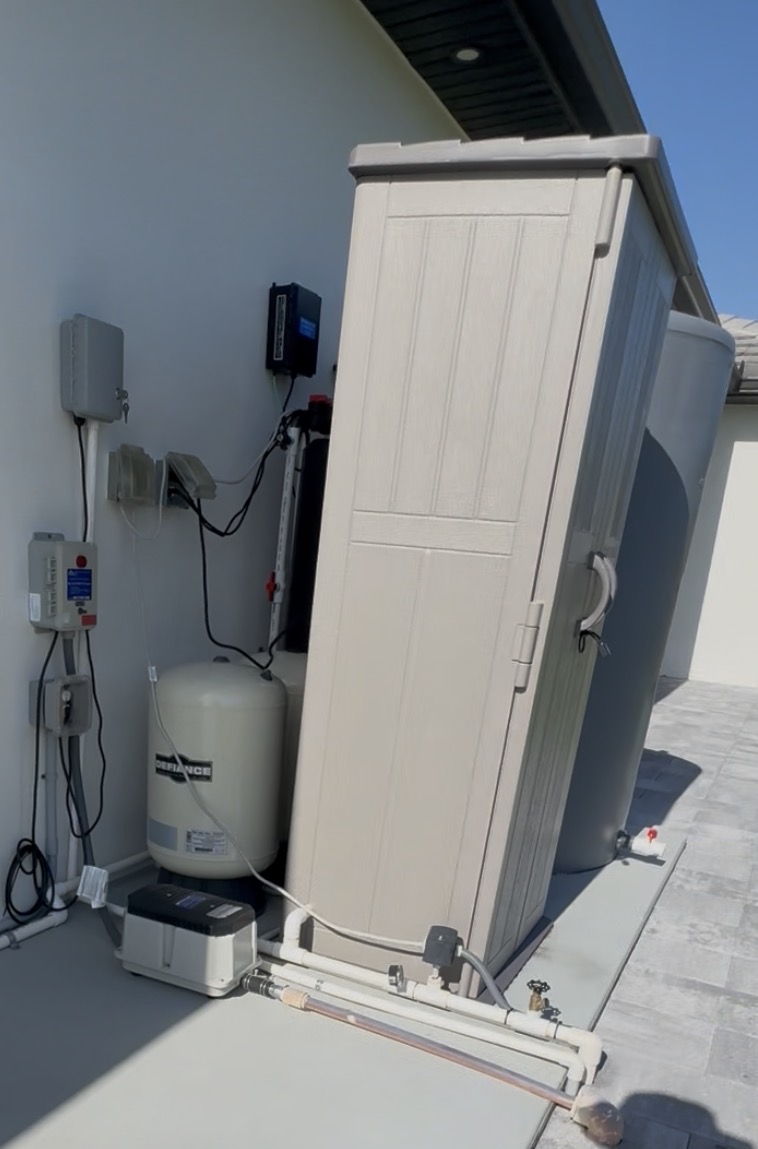
Completed Trinity whole-house RO installation with protected equipment, atmospheric storage, and pressurized delivery.
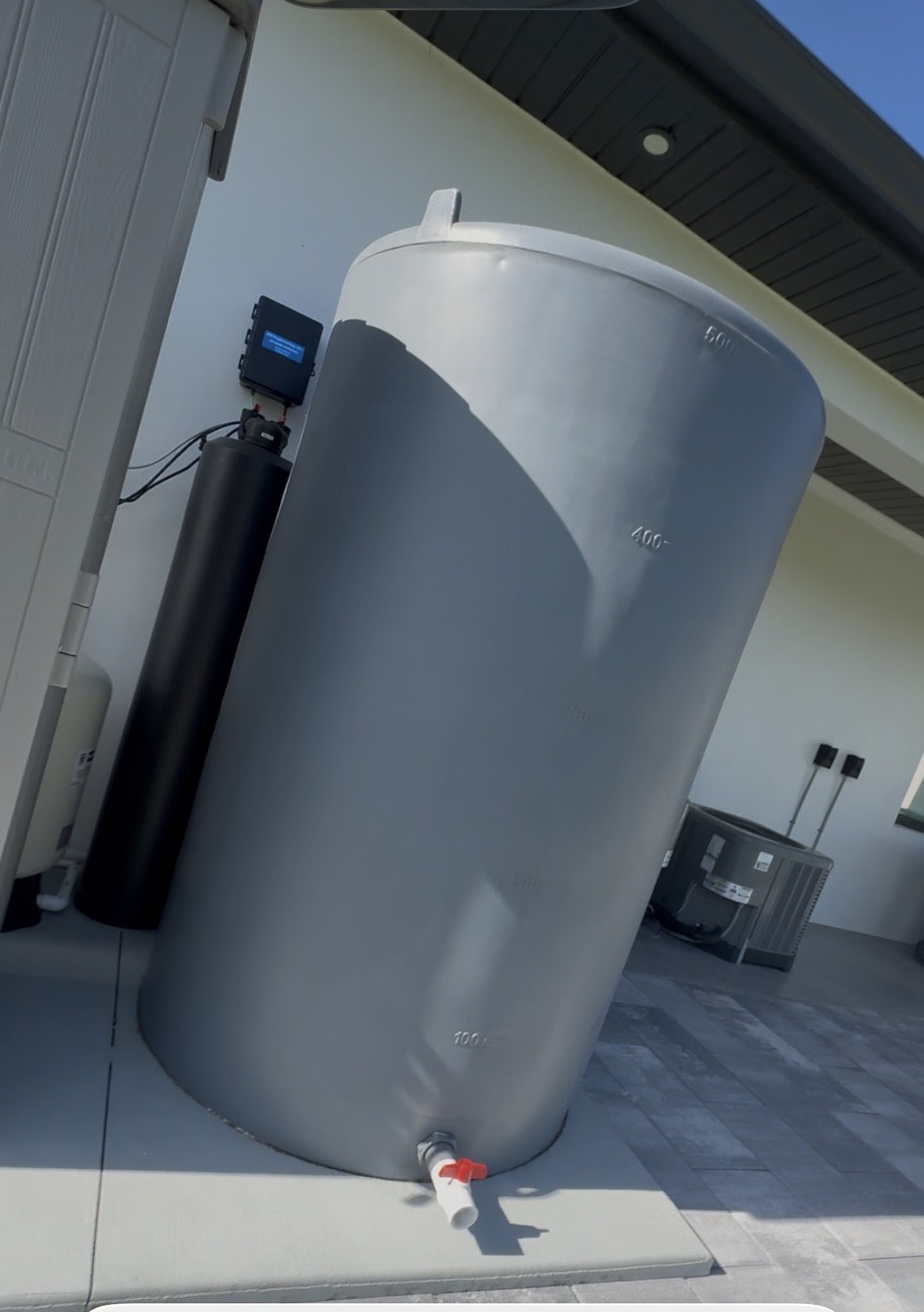
A complete RO train
Removing the wrong constituent too late can foul membranes or create avoidable maintenance. A complete design protects the membrane first, then stores and delivers treated water at usable household pressure.
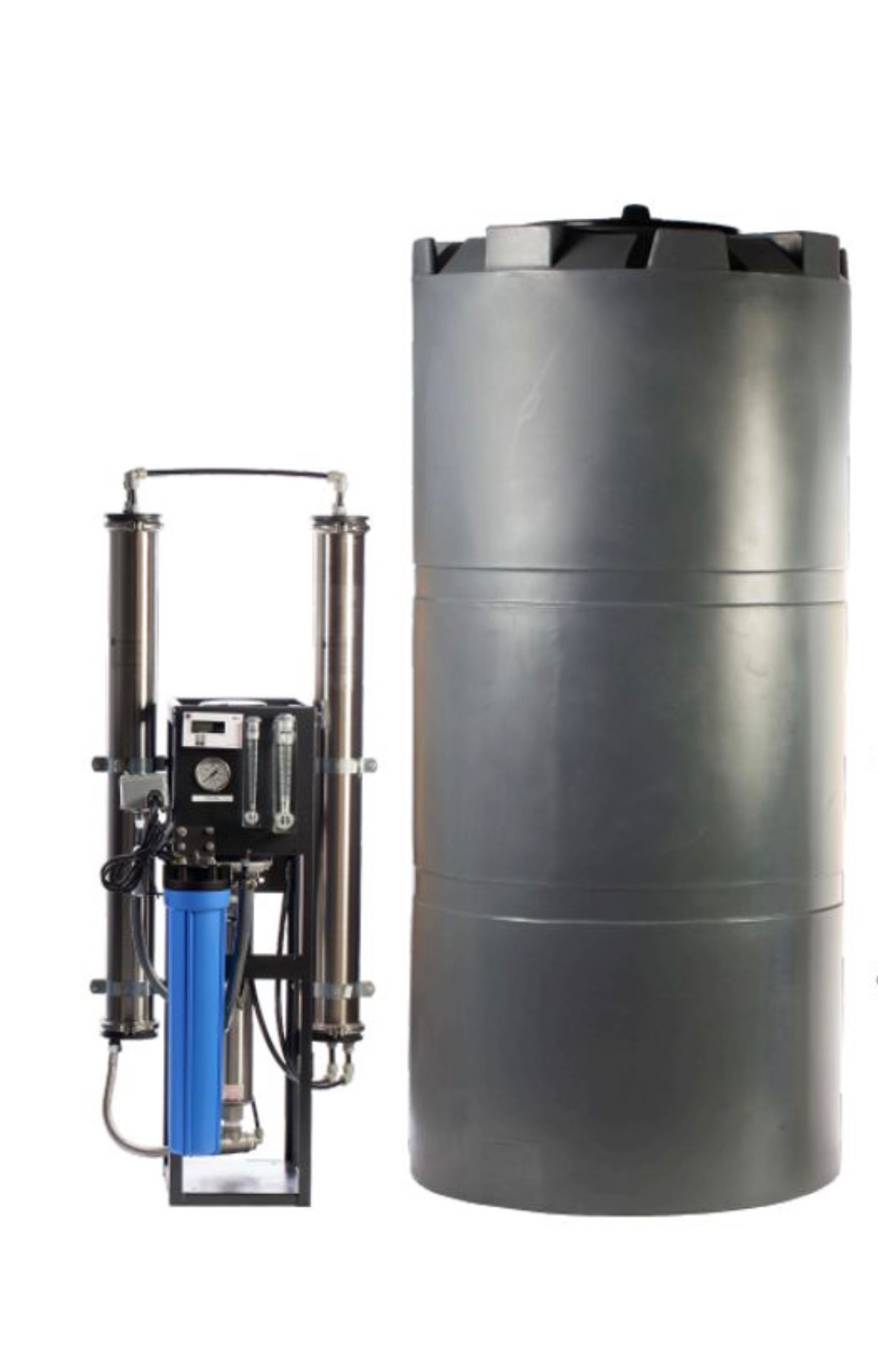
System equipment
A whole-house RO package combines membrane production with atmospheric storage. Trinity sizes the equipment around the home’s water chemistry, daily demand, available space, and required delivery pressure.
Equipment reference image. Final components and layout depend on the site-specific system design.
Design checkpoints
What must be reduced, and what will protect the membrane?
How much treated water does the household actually use?
Can pumps and plumbing support simultaneous fixtures?
Where will storage, drain, power, and service clearance go?
Who monitors filters, membranes, sanitization, and performance?
Optional redundancy and bypass planning for critical homes.
Financing available
Trinity offers financing options through Synchrony for qualified applicants. Review current terms directly with the lender before applying.
Local help. Clear next steps.
Tell us what you are seeing, smelling, or trying to improve. We will help you choose the right next step.